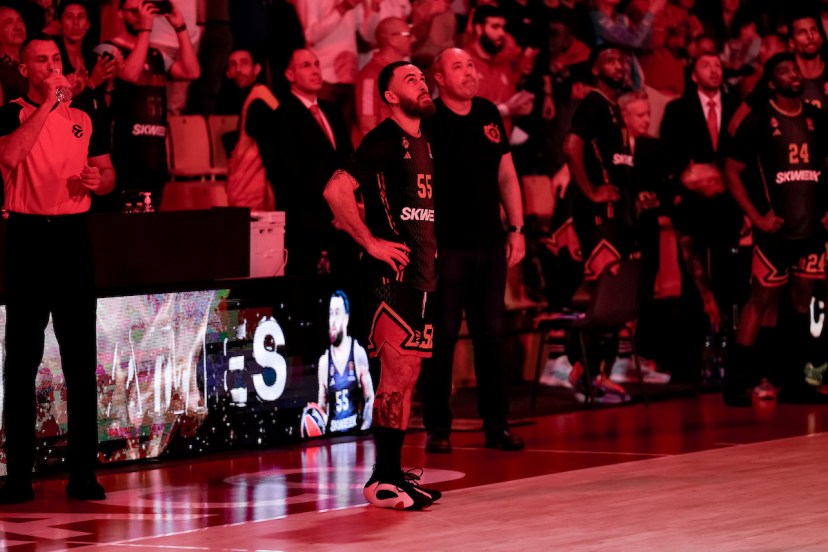
Fifteen months ago, Monaco was playing in the EuroLeague Final. On June 23, the club celebrated winning the French championship after a remarkable season that ended with a historic four-trophy haul. Today, Monaco is out of the Betclic Elite, out of Elite 2 and out of the EuroCup. In just a few weeks, one of the clubs that symbolized the rise of the new aristocracy of European basketball has gone from competing for major titles to facing the very real possibility of having to restart from the third tier of French basketball.
This is not simply a crisis. It is a collapse.
And the downfall was not even as sudden as it may appear. During the final season, the warning signs were numerous: salaries were not being paid regularly, players had begun protesting, practices were being held with severely depleted rosters and the club’s increasingly difficult financial situation was becoming harder to hide. Mike James returned only for the decisive game of the final after weeks of tension. Once again, the court had managed to mask everything. Monaco kept winning, and therefore it still looked like Monaco.
This is probably the great illusion built by Roca Team over the past few years. A team capable of spending heavily, attracting stars, reaching the Final Four, making it to a EuroLeague final and rapidly becoming a continental powerhouse. But while a contender was being built on the court, the foundations off it were becoming increasingly fragile. France has simply presented the bill.
The issue, in fact, is not about allegations of fraud or falsified financial statements. The point raised by the governing and control bodies is much simpler and, precisely for that reason, even more damaging: the club failed to provide, within the established deadlines, the guarantees required to demonstrate the financial sustainability of the 2026-27 season.
The first setback came on July 3, before being confirmed on August 1 by the Appeals Chamber of the French Federation, which stressed that the club had failed to submit the required documentation within the deadlines. Even the emergence of a potential new investor willing to mobilize €10 million was not enough. Because there is an enormous difference between promising money and certifying, within the required deadlines, that those funds can actually sustain a professional basketball club.
The CNOSF issued a negative opinion, and Monaco’s final attempt to obtain an urgent review of its case from the FFBB was also rejected.
And this is where the story takes on an almost paradoxical dimension.
Monaco did not fall because it could no longer build a competitive team. It fell because it could no longer demonstrate that it could sustain one.
Monaco’s collapse leaves the club outside France’s top divisions
The result today is brutal. Saint-Quentin has been reinstated in the Betclic Elite in Monaco’s place, while the EuroCup has removed Monaco from its schedule and inserted Bosna Sarajevo into the group that was supposed to feature Roca Team.
The club that just over a year ago was playing to become European champion no longer meets the requirements to participate in the continent’s second-tier competition.
Technically, the route through the administrative court remains open, although in recent hours the club did not appear inclined to pursue it. At the same time, the possibility of joining the ABA League has emerged, with contacts reportedly underway to find a place outside the French system.
For now, more than a project, it looks like a final attempt to preserve an international dimension.
But the real issue goes far beyond which league Monaco will play in over the coming months.
Monaco’s story is a warning for European basketball
This episode shows how quickly a major European project can unravel when sporting success grows faster than the structure supposed to support it.
You can buy players, reach Final Fours, play in finals and fill a trophy cabinet. But no roster can replace a stable organization.
Monaco appeared to have accelerated its journey into the European elite.
In the end, it may have accelerated it too much.


Commenta
Visualizza commenti